
Budget-Friendly Organization Must-Haves for Tools & Gear that Save Time and Money (Winter, December, Year-End)
Materials Needed
Safety Tips
- Wear gloves and safety glasses when handling tools and organizing.
- Follow manufacturer instructions for all tools and storage solutions.
- Store sharp tools in designated areas to prevent accidents.
- Avoid overloading shelves to prevent collapse and injury.
Budget-Friendly Organization Must-Haves for Tools & Gear that Save Time and Money
DIY enthusiasts know that a cluttered workspace can quickly turn a fun project into a frustrating ordeal. I clearly remember my first big project in the garage—an hour spent hunting for a wrench made me question my DIY ambitions. The lesson? I could either invest heavily in commercial storage solutions or get creative with what I already owned. I chose the latter, and that experience opened my eyes to budget-friendly organization.
Quick Answer
Organizing tools is all about creating zones: hand tools, power tools, and consumables. Use clear bins or repurposed containers to keep everything tidy and accessible. This method saves time and money by making your workspace efficient without breaking the bank.
Before You Start
Before diving in, take a moment to think through these steps:
- Assess Your Space: Measure your area to figure out how much storage you can fit.
- Identify Your Tools: List everything you have; you might be surprised at the space you need for seldom-used items.
- Plan for Growth: Leave room for future tools or gear you might acquire.
- Budget Wisely: Set a budget for any additional storage solutions.
- Safety First: Wear Personal Protective Equipment (PPE) when organizing sharp or heavy items.
Method Overview
I found that a zone-based organization method works wonders for DIYers with diverse tools. By categorizing your workspace into hand tools, power tools, and consumables, you can make use of materials on hand or find budget-friendly solutions. However, if you have limited space or a large collection of specialized tools, consider vertical storage systems or custom cabinets.
Deep Steps
Here’s a straightforward guide to organizing your tools:
- Gather Supplies:
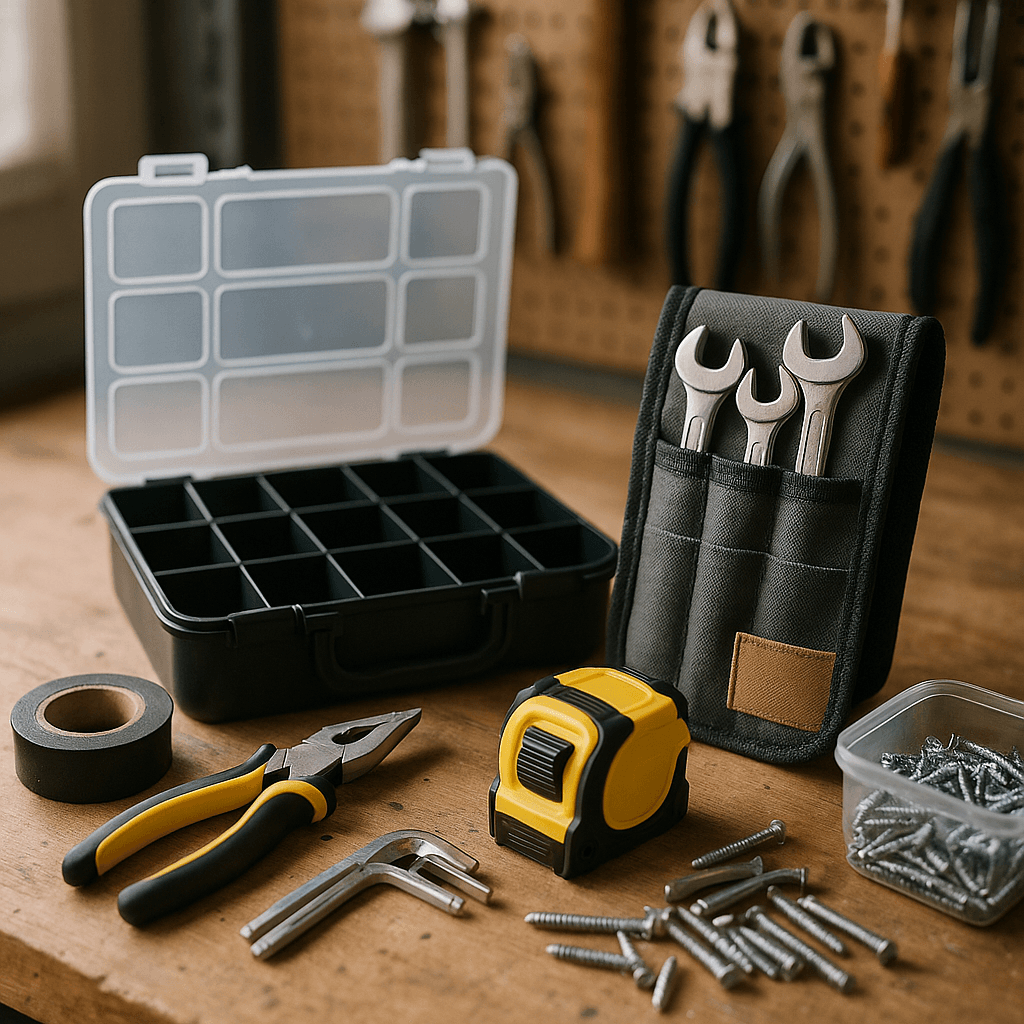
- Clear bins or drawers (old plastic containers work great)
- Labels (homemade ones are easy to create)
- Shelf or pegboard (DIY pegboards can save money)
- Clear Your Space:
- Empty your workspace completely to see what you have and make cleaning easier.
- Sort Tools into Categories:
- Hand Tools: Hammers, screwdrivers, pliers, etc.
- Power Tools: Drills, saws, sanders, etc.
- Consumables: Nails, screws, glue, etc.
- Assign Zones:
- Designate areas for each category. For instance, keep hand tools in a bin on a shelf and hang power tools on a pegboard.
- Label Everything:
- Clearly mark each bin or drawer with labels. A label maker or printed labels work well.
- Maintain the System:
- Set a reminder to reassess your organization every few months; it’s easy for chaos to creep back in.
Decision Points
While organizing, I encountered several decision points:
- Option A: Clear Plastic Bins vs. Wooden Drawers
I went with clear plastic bins because they’re lightweight and let me see contents easily. Wooden drawers can be more durable, but they come at a higher cost and weight.
- Option A: Pegboard vs. Shelving Units
I chose a pegboard since it saves floor space and keeps frequently used tools accessible. Shelving units can be bulkier and less flexible.
- Option A: DIY Labels vs. Store-Bought
I made my own labels from cardstock and a marker. While store-bought options look nicer, they can be pricier and less customizable.
Troubleshooting & Fix-ups
Even with the best plans, things can go awry:
- Failure Mode: Overcrowded Bins
If bins are overflowing, sort through and remove unnecessary items. Redistribute into additional bins if needed.
- Failure Mode: Tools Falling Off Pegboard
Use the right hooks for the weight of your tools. If they keep falling, consider upgrading to sturdier hooks.
- Failure Mode: Labels Falling Off
Use laminate sheets to cover labels or switch to more durable adhesive labels that stay put.
- Failure Mode: Dust Buildup
A clean workspace is crucial. Set a schedule to wipe down surfaces and bins weekly to keep dust at bay.
Common Mistakes & How to Avoid Them
- Not Measuring Space: Measure before buying anything to avoid overcrowding.
- Ignoring Vertical Space: Utilize walls for additional storage—this is often overlooked.
- Overcomplicating Organization: Keep it simple; complex systems can lead to frustration.
- Failing to Revisit the System: Schedule regular check-ins to maintain order.
- Not Considering Accessibility: Place frequently used tools in easily reachable spots.
Safety Tips
- Wear PPE: Always use gloves and safety glasses when handling tools.
- Follow Manufacturer Instructions: This is key for safe use of any tools or storage solutions.
- Be Careful with Sharp Tools: Store these in a designated area to prevent accidents.
- Avoid Overloading Shelves: Overloaded shelves can collapse, leading to injury.
Budget & Time Ranges
The budget for organizing tools varies:
- Basic Organization: $20-$50 for bins and labels.
- Moderate Upgrades: $100-$200 for pegboards and shelving.
- Full Overhaul: $500+ for professional storage solutions.
Time can also differ. A simple organization can be completed over a weekend, while a full overhaul may take a week or longer, especially if you’re building custom storage.
Stop & Call a Pro
Consider calling in a professional if you encounter:
- Structural Issues: If your workspace has significant safety concerns, like unstable shelving.
- Electrical Work: For new lighting or outlets, an electrician should handle it.
- Large Scale Projects: For extensive renovations or custom storage, pros can ensure safe and proper installation.
What I’d Do Differently If I Did This Again
- Skip Unnecessary Steps: I realized I didn't need as many bins; fewer would have sufficed.
- Reassess Earlier: Categorizing tools before clearing my space could have saved time.
- Upgrade Tools: I should have invested in better hooks for the pegboard sooner.
- Prepare for Surprises: I found tools I forgot I had! A better inventory system would have helped me keep track.
By organizing your tools with these budget-friendly methods, you’ll not only save time but also make your DIY projects smoother and more enjoyable. Happy organizing!
Recommended Gear
Disclosure: As an Amazon Associate, we may earn from qualifying purchases at no extra cost to you.
Common Mistakes
- Not measuring space before purchasing storage solutions.
- Ignoring vertical space for additional storage.
- Creating overly complex organization systems.
- Failing to regularly revisit and maintain the organization.
- Placing frequently used tools in hard-to-reach spots.
)